
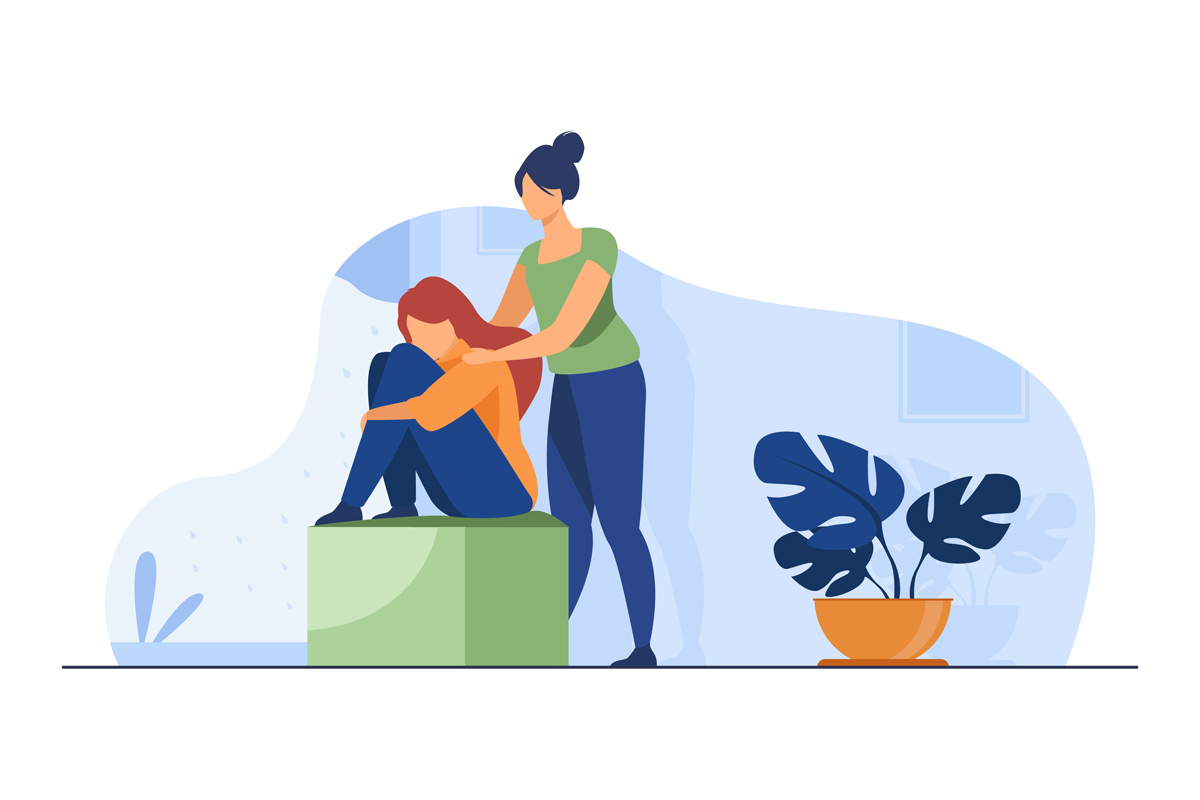
You just went through something hard, a breakup, a job loss, a move, a diagnosis, and you expected to bounce back. Instead, you’re still crying in the car, unable to sleep, snapping at people you love, or just… numb.
You’re not weak. You’re not broken. You may be experiencing adjustment disorder – one of the most common and most misunderstood mental health conditions- and the fact that you’re reading this already matters.
What Exactly Is Adjustment Disorder?
Adjustment disorder (AD) is a stress-response condition that develops when someone reacts to an identifiable life stressor in a way that is disproportionate to what most people would experience or that significantly impairs their daily functioning. Unlike PTSD, which follows a life-threatening trauma, AD can be triggered by everyday, yet still painful events.
It is far more common than most people realise. Research estimates that adjustment disorder accounts for
5–21% of diagnoses. In outpatient mental health settings, it is the single most common psychiatric diagnosis among medical inpatients.²
The Diagnostic and Statistical Manual of Mental Disorders, 5th Edition (DSM-5) defines adjustment disorder as emotional or behavioural symptoms arising within three months of a stressor, characterised by either marked distress that exceeds what would normally be expected, or significant impairment in social, occupational, or other important areas of functioning. ¹
“Adjustment disorder occupies an important niche between normal stress responses and full-blown clinical depression or anxiety — it is real suffering that deserves real attention.”
Casey & Bailey,
World Psychiatry
, 2011 ³
Common stressors that can trigger adjustment disorder
No stressor is “too small” to cause adjustment disorder. Research shows it can follow events such as:
- Divorce or relationship breakdown
- Job loss or financial hardship
- A serious illness — your own or a loved one’s
- Relocation or major life transitions
- Retirement or leaving education
- A new baby or unexpected caregiving responsibilities
- Even positive changes like a promotion or marriage that bring unforeseen pressure ⁴
The Six Subtypes – Which One Sounds Like You?
- With depressed mood – tearfulness, hopelessness, and low energy, but not meeting the full criteria for major depressive disorder.
- With anxiety – persistent worry, nervousness, or jitteriness; in children, this often presents as fear of separation from caregivers.
- With mixed anxiety and depressed mood – a combination of both of the above, and the most commonly diagnosed form in adults.
- With disturbance of conduct– acting out, aggression, or reckless behaviour; more prevalent in adolescents.
- With mixed disturbance of emotions and conduct – emotional symptoms alongside problematic behaviours.
- Unspecified – reactions such as social withdrawal or unexplained physical complaints that don’t fit the categories above.
Why Do Some People Develop It and Others Don’t?
If you’re wondering “why me?” — you’re asking exactly the right question, and science has meaningful answers. Research points to a biopsychosocial model in which three categories of factors interact. ⁵
Biological factors include genetic predisposition to stress reactivity, differences in how the body regulates the HPA axis (the stress hormone system), and prior mental health history. Neuroimaging studies have found altered connectivity in the amygdala and prefrontal cortex in people with adjustment disorder, the brain regions responsible for threat detection and emotional regulation.⁶
Psychological factors include pre-existing cognitive patterns such as perfectionism or low frustration tolerance, prior adverse life experiences, and how an individual appraises the stressor. Critically, a stressor’s subjective weight matters far more than its objective severity. What feels manageable to one person can be genuinely overwhelming to another, and both responses are valid.
Social factors include the quality of available social support, financial resources, cultural expectations around emotional expression, and the presence of concurrent life pressures. Lack of social support is one of the strongest predictors of developing adjustment disorder following a stressor. ⁷
7 Evidence-Based Strategies to Support Your Recovery
While professional support is invaluable (more on that below), these strategies are grounded inclinical research and can be started today.
- Name the stressor, don’t minimise it
Write it down. Say it aloud to someone you trust. Research on expressive writing by Pennebaker& Beall found that articulating a painful experience in structured narrative form measurably reduces its physiological and psychological grip. ⁸ Naming what happened removes some of its power to ambush you. - Protect your sleep
Stress disrupts sleep; disrupted sleep amplifies stress – a brutal cycle. A consistent wake time (not just bedtime) is the single most powerful anchor you can set for your circadian rhythm. Avoid alcohol as a sleep aid; it fragments REM sleep, which is critical for emotional processing.⁹ - Move your body for 20 minutes a day
A large meta-analysis published in the British Journal of Sports Medicine (2023) found that 150 minutes of moderate exercise per week reduces symptoms of depression and anxiety by approximately 43%, comparable to antidepressant medication for mild-to-moderate presentations. ¹⁰ You don’t need a gym. A brisk daily walk is enough. - Lean on your social network, even minimally
Research consistently shows that perceived social support buffers against adjustment disorder and accelerates recovery.⁷ You don’t need to explain everything. A coffee, a text, or a walk with one person begins to restore connection. Start small. - Use problem-focused coping where you can
Distinguish between stressors you can influence and those you cannot. For controllable stressors, active problem-solving reduces helplessness. Lazarus & Folkman’s foundational model of stress and coping established that matching your coping strategy to the controllability of a stressor is key to recovery.¹¹ - Practice brief daily mindfulness
Even 10 minutes of guided mindfulness meditation has been shown to reduce rumination, repetitive negative thinking that drives adjustment disorder symptoms forward rather than through.¹² Free guided sessions are available on platforms like Insight Timer or YouTube. - Limit news and social media
During a period of vulnerability, chronic exposure to negative news functions as a secondary stressor. Setting a single 15-minute window per day for news and keeping phones out of the bedroom is not avoidance. It is resource management.
When to Seek Professional Help
These signs suggest it is time to reach out to a GP, psychologist, or psychiatrist:
- Your symptoms have lasted more than two weeks with little improvement
- You are struggling to fulfil responsibilities at work, school, or home
- You are using alcohol, substances, or risky behaviour to cope
- You are experiencing thoughts of harming yourself or that life is not worth living
- You feel completely unable to experience any pleasure or positive emotion
- Your physical health is being affected – appetite, immune function, or energy has changed dramatically
What Does Professional Treatment Look Like?
The good news: adjustment disorder has a strong prognosis with appropriate treatment, and most people recover fully, particularly when help is sought early.¹³
The primary evidence-based treatment is psychotherapy, particularly short-term approaches that directly address the stressor and the meaning it holds for the individual. Effective modalities include:
- Cognitive-Behavioural Therapy (CBT)
- Brief Psychodynamic Therapy
- Supportive Therapy
- Problem-Solving Therapy
- Mindfulness-Based Cognitive Therapy (MBCT)
- Eye Movement Desensitisation and Reprocessing (EMDR)
Medication — typically short-term, low-dose anxiolytics or antidepressants — may be considered when symptoms are severe enough to impair engagement with therapy, but
pharmacotherapy alone is rarely the primary treatment for AD. ¹⁴ Always discuss the full picture with a licensed clinician.
Research by Strain & Diefenbacher found that even 4–8 sessions of targeted psychotherapy can produce clinically meaningful improvement in adjustment disorder, making it one of the most treatment-responsive presentations in all of mental health care.¹
You Are Not Stuck, You Are Adjusting
Adjustment disorder is not a character flaw or proof that you can’t handle life. It is your mind and body doing something profoundly human: struggling to absorb a change that genuinely hurts. That struggle deserves compassion, especially your own.
The science is clear: with the right support, most people move through adjustment disorder and often emerge with greater self-awareness, stronger relationships, and more resilient coping skills than before.
If something in this article resonated with you, consider sharing it with someone who might need it, or taking the first step and speaking to a professional. You don’t have to feel this way indefinitely. Recovery is not only possible; it is likely
References
- American Psychiatric Association (2022).
Diagnostic and Statistical Manual of Mental Disorders, 5th Edition, Text Revision (DSM-5-TR). American Psychiatric Publishing. - Carta MG et al. (2009). Adjustment disorders: epidemiology, diagnosis and treatment.
Clinical Practice & Epidemiology in Mental Health, 5, 33. - Casey P & Bailey S (2011). Adjustment disorders: the state of the art.
World Psychiatry ,10(1), 11–18. - Maercker A et al. (2013). Adjustment disorders as a stress response syndrome.
Psychopathology , 46, 32–40. - O’Donnell ML et al. (2019). A systematic review examining adjustment disorder prevalence, associated factors, and outcomes. Acta Psychiatrica Scandinavica.
- Helmbold K et al. (2021). Neural correlates of emotional regulation in adjustment disorder.
NeuroImage Clinical. - Hoge EA et al. (2018). Social support and adjustment disorder outcomes.
Journal of Anxiety Disorders. - Pennebaker JW & Beall SK (1986). Confronting a traumatic event: toward an understanding of inhibition and disease. Journal of Abnormal Psychology , 95(3), 274–281.
- Walker MP (2017). Why We Sleep. Scribner.
- Singh B et al. (2023). Effectiveness of physical activity interventions for improvingdepression, anxiety, and distress. British Journal of Sports Medicine.
- Lazarus RS & Folkman S (1984). Stress, Appraisal, and Coping. Springer.
- Hoge EA et al. (2023). Mindfulness-based stress reduction vs antidepressant medication for anxiety disorders. JAMA Psychiatry
- Strain JJ & Diefenbacher A (2008). The adjustment disorders: the conundrums of the diagnoses. Comprehensive Psychiatry.
- Skodol AE et al. (1996). Psychotherapy vs pharmacotherapy for adjustment disorder. Journal of Clinical Psychiatry
This article is for informational purposes only and does not constitute medical advice. If you are in crisis, please contact a healthcare professional or crisis line immediately.