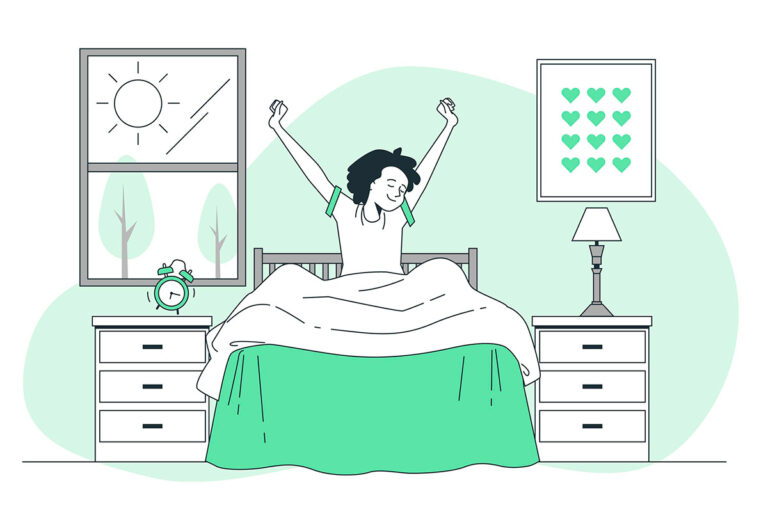


Your alarm goes off. Within seconds, your heart is racing. Your mind floods with worries about the day ahead—that important meeting, the bills that need paying, the endless to-do list. Your stomach churns as you lie there, already feeling defeated before your feet even hit the floor.
If this scenario sounds familiar, you’re experiencing morning anxiety—a phenomenon that affects approximately 54% of people with anxiety disorders (Anxiety and Depression Association of America,2021). That overwhelming dread upon waking isn’t a character flaw or weakness; it’s a real, physiological response that can be understood and managed with the right approach.
Morning anxiety doesn’t just steal precious moments of peace from your day—it sets a cascade of stress that can affect your entire 24-hour cycle. However, here’s the empowering truth: once you understand what’s happening in your body and mind, you can take concrete steps to reclaim calm and confident mornings.
The Science Behind Morning Anxiety: What’s Really Happening
The Cortisol Connection
When you wake up, your body naturally experiences what researchers call the “cortisol awakening response” (CAR). Studies published in Psychoneuroendocrinology show that cortisol levels typically spike 50- 160% within 30-45 minutes of waking (Clow et al., 2010). This surge is designed to energize you for the day ahead, but for some people, this natural process goes into overdrive.
Research from the University of Westminster found that individuals with anxiety disorders often have an exaggerated cortisol awakening response, with levels remaining elevated 75% longer than those without anxiety (Vreeburg et al., 2010). This explains why you might wake up feeling like you’ve already run a marathon when you’ve barely opened your eyes.
Blood Sugar and the Anxiety Spiral
After 8-12 hours without food, your blood glucose levels naturally drop during sleep. A study in the
Journal of Clinical Endocrinology & Metabolism
revealed that this drop triggers the release of counter-regulatory hormones, including adrenaline and noradrenaline—the same hormones involved in the fight-or-flight response (Broussard et al., 2016).
For people prone to anxiety, this natural blood sugar fluctuation can trigger symptoms identical to an anxiety attack: rapid heartbeat, sweating, trembling, and overwhelming worry. The key difference? This is happening before you’re even fully conscious.
Sleep Architecture and Morning Mood
Your morning anxiety might actually begin during sleep. Research from Harvard Medical School shows that people with anxiety disorders spend more time in REM sleep—the stage when most vivid dreams and nightmares occur—and less time in deep, restorative sleep stages (Palagini et al., 2013). This disrupted sleep architecture leaves your nervous system hypervigilant upon waking.
Additionally, studies indicate that the transition from sleep to wakefulness activates the brain’s “default mode network”—the neural circuits responsible for self-referential thinking and worry. When this network fires up too intensely, it can flood your consciousness with anxious thoughts before you’re mentally prepared to handle them.
Evidence-Based Techniques for Managing Morning Anxiety
1. The 4-7-8 Breathing Technique (Immediate Relief)
Developed by Dr. Andrew Weil and backed by research from the Journal of Yoga. This technique activates your parasympathetic nervous system within minutes (Sharma et al., 2017).
How to implement:
- While still in bed, place one hand on your chest, one on your belly
- Exhale completely through your mouth
- Close your mouth and inhale through your nose for 4 counts
- Hold your breath for 7 counts
- Exhale through your mouth for 8 counts, making a “whoosh” sound
- Repeat 3-4 cycles
Why it works: This pattern forces your nervous system to slow down by increasing carbon dioxide levels, which triggers your body’s relaxation response. Studies show measurable decreases in cortisol within 10 minutes of practice.
2. Progressive Muscle Relaxation (PMR)
Research published in Applied Psychology: Health and Well-Being demonstrates that PMR can reduce morning anxiety by up to 60% when practiced consistently for two weeks (Toussaint et al., 2021).
Specific morning protocol:
1. Starting with your toes, tense the muscles for 5 seconds
2. Release and notice the contrast between tension and relaxation
3. Move systematically upward: calves, thighs, glutes, abdomen, chest, arms, shoulders, neck, face
4. End by tensing your entire body for 5 seconds, then releasing completely
Implementation tip: Record yourself reading the instructions slowly, then play it back each morning. This eliminates the cognitive load of remembering steps when you’re anxious.
3. Light Therapy and Circadian Regulation
A study in the Journal of Clinical Medicine found that 30 minutes of bright light exposure (10,000 lux) within one hour of waking reduced anxiety symptoms by 43% over four weeks (Loving et al., 2005).
Practical application:
- Open curtains immediately upon waking
- Use a light therapy lamp (10,000 lux) for 20-30 minutes while having breakfast
- If weather permits, step outside for 5-10 minutes within the first hour of waking
Budget-friendly alternative: Simply sit by a bright window while having your morning routine. Natural light, even on cloudy days, provides 1,000-10,000 lux.
4. The Protein-First Breakfast Strategy
Research from the American Journal of Clinical Nutrition shows that consuming 20-30 grams of protein within one hour of waking stabilizes blood sugar and reduces cortisol production by up to 25% (Hoerte et al., 2014).
Optimal morning combinations:
- 2 eggs + 1 slice whole grain toast + 1/2 avocado (26g protein)
- Greek yogurt (1 cup) + nuts + berries (20g protein)
- Protein smoothie: protein powder + spinach + banana + almond butter (25g protein)
Emergency option: Keep protein bars (15g+ protein) by your bedside for severe morning anxiety episodes. Eating within 10 minutes of waking can prevent blood sugar crashes.
5. The 5-4-3-2-1 Grounding Technique
Validated by research in Clinical Psychology Review, grounding techniques reduce anxiety by redirecting attention from internal worry to external reality (Stein & Stein, 2008).
Morning Grounding Technique:
- 5 things you can see: Sunlight on the wall, the color of your sheets, etc.
- 4 things you can touch: The texture of your pillow, etc.
- 3 things you can hear: Birds outside, your own breathing, distant traffic
- 2 things you can smell: Coffee brewing, fresh air from the window
- 1 thing you can taste: The lingering taste of water, mint from the toothpaste
Pro tip: Practice this technique with your eyes closed first, then open them. This creates a gentle transition from sleep consciousness to waking awareness.
Advanced Strategies for Long-Term Management
Cognitive Behavioral Techniques
Research from Stanford University shows that specific CBT techniques can reduce morning anxiety by 70% over 8-12 weeks (Hofmann et al., 2012).
Morning thought challenging:
- Write down the first worried thought that enters your mind
- Ask: “What evidence supports this worry?”
- Ask: “What evidence contradicts this worry?”
- Reframe: “What would I tell a friend having this worry?”
Worry scheduling: Designate 15 minutes later in the day as “worry time.” When morning anxieties arise, write them down and promise to address them during your scheduled worry period. Studies show this technique reduces rumination by 35%.
Sleep Hygiene Optimization
Research from the Sleep Medicine Reviews demonstrates that improving sleep quality can reduce morning anxiety by up to 50% (Alvaro et al., 2013).
Evidence-based evening protocol:
- 7 PM: Last caffeine intake (6-hour half-life affects sleep)
- 8 PM: Dim lights to 50% (triggers natural melatonin production)
- 9 PM: Electronics off (blue light suppresses melatonin for 3+ hours)
- 10 PM: Begin relaxation routine (reading, gentle stretching, meditation)
Room optimization: Keep bedroom temperature between 65-68°F (18-20°C). Research shows this range optimizes deep sleep stages that reduce morning anxiety.
When Professional Help Is Essential
While self-management techniques are powerful, certain symptoms require professional intervention. Seek help from a mental health professional if you experience:
Immediate red flags:
- Panic attacks that occur more than twice per week upon waking
- Morning anxiety that prevents you from getting out of bed for more than an hour
- Physical symptoms like chest pain, difficulty breathing, or dizziness that concern you medically
- Thoughts of self-harm or feeling like life isn’t worth living
Persistent patterns warranting support:
- Morning anxiety lasting more than 3 months despite consistent self-help efforts
- Needing alcohol, substances, or medication to cope with morning feelings
- Anxiety that significantly impacts work, relationships, or daily functioning
- Sleep disturbances lasting more than 4 weeks
Types of professional help:
- Cognitive Behavioral Therapy (CBT): 12-16 sessions show 70% improvement rates for anxiety disorders
- Acceptance and Commitment Therapy (ACT): Particularly effective for anxiety with depression components
- EMDR: Helpful if morning anxiety stems from trauma or PTSD
Creating Your Personal Morning Anxiety Action Plan
Week 1-2: Foundation Building
- Implement one breathing technique daily
- Establish consistent sleep/wake times (even on weekends)
- Begin a protein-first breakfast routine
Week 3-4: Integration
- Add light therapy or morning sunlight exposure
- Introduce grounding techniques as needed
- Start evening routine optimization
Week 5-6: Fine-Tuning
- Track anxiety levels (1-10 scale) to identify patterns
- Adjust techniques based on what works best for your body
- Consider professional support if improvements plateau
Maintenance Phase:
- Continue 2-3 most effective techniques daily
- Use additional strategies during high-stress periods
- Regular check-ins with yourself or a therapist
Your Morning Anxiety Recovery Is Possible
Morning anxiety might feel overwhelming and permanent, but research consistently shows that with the right combination of techniques, most people experience significant improvement within 4-8 weeks. You’re not broken, and you’re not weak—you’re experiencing a common, treatable condition that responds well to evidence-based interventions.
Remember that recovery isn’t linear. Some mornings will feel easier than others, and that’s completely normal. Each time you practice a coping technique, you’re literally rewiring your brain’s response to morning stress. Neuroscience research shows that consistent practice creates new neural pathways that make calm, confident mornings your new default.
Your mornings don’t have to be a battleground. With patience, consistency, and the right tools, you can transform those first moments of consciousness from overwhelming dread into peaceful possibility. Every small step you take toward managing your morning anxiety is an investment in not just better mornings, but better days, better sleep, and better overall mental health.
The sunrise doesn’t just mark the beginning of a new day—it can mark the beginning of your recovery. Your calm, confident mornings are waiting for you.
If you’re experiencing severe anxiety or thoughts of self-harm, please contact a mental health professional immediately or call the National Suicide Prevention Lifeline at 988.
References
- Anxiety and Depression Association of America. (2021). Facts & Statistics. Retrieved from adaa.org
- Alvaro, P. K., et al. (2013). The bidirectional relationship between sleep and mood disorders.
SleepMedicine Reviews, 17(4), 297-310. - Broussard, J. L., et al. (2016). Impaired insulin signaling in human adipocytes after experimental sleep restriction. Journal of Clinical Endocrinology & Metabolism, 101(11), 4405-4413.
- Clow, A., et al. (2010). The cortisol awakening response: More than a measure of HPA axis function.
Psychoneuroendocrinology , 35(7), 997-1009. - Hoertel, H. A., et al. (2014). A high-protein breakfast prevents body fat gain in overweight youngadults. American Journal of Clinical Nutrition, 100(5), 1398-1405.
- Hofmann, S. G., et al. (2012). The efficacy of cognitive behavioral therapy: A review of meta-analyses.
Cognitive Therapy and Research, 36(5), 427-440 - Loving, R. T., et al. (2005). Bright light treatment of depression for older adults.
Journal of Clinical Medicine, 4(11), 1982-1992. - Palagini, L., et al. (2013). REM sleep dysregulation in depression: State of the art.
Sleep Medicine Reviews, 17(5), 377-390. - Sharma, A., et al. (2017). Efficacy of breathing-based yoga interventions on stress, anxiety and depression. International Journal of Yoga, 10(3), 148-153.
- Stein, D. J., & Stein, M. B. (2008). Cognitive behavioral techniques for anxiety disorders.
Clinical Psychology Review, 28(4), 592-606. - Toussaint, L., et al. (2021). Effectiveness of progressive muscle relaxation, deep breathing, and guided imagery. Applied Psychology: Health and Well-Being
, 13(1), 123-139. - Vreeburg, S. A., et al. (2010). Salivary cortisol levels and the 2-year course of depressive and anxiety disorders. Psychoneuroendocrinology, 35(9), 1378-1387.