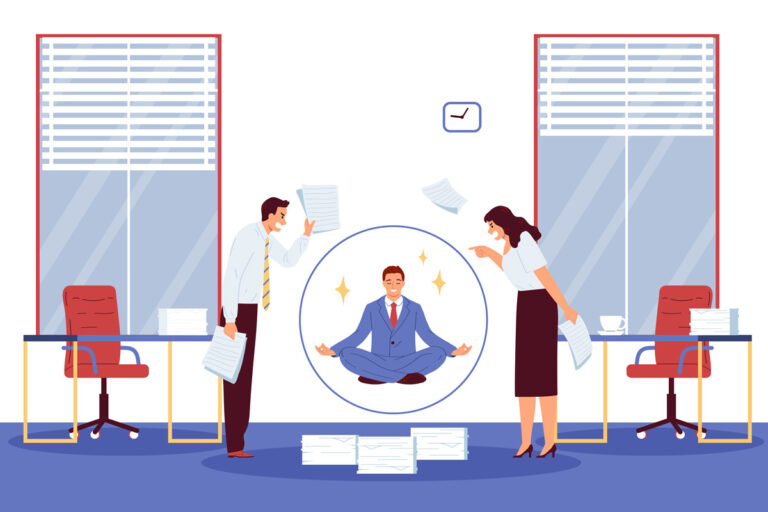


Picture this: It’s 9 PM, you’re still at your desk (or kitchen table, let’s be honest), and you’re mentally calculating how many tasks you didn’t cross off your impossibly long to-do list. Your productivity app is sending you passive-aggressive notifications about your “streak,” and you’re wondering if successful people actually sleep or if they’ve just figured out how to optimize their REM cycles.
If this sounds familiar, congratulations—you’ve fallen victim to one of the most pervasive myths of our time: that being productive means being constantly busy, and that more output always equals more success.
The Hamster Wheel We’ve Built for Ourselves
We live in an era where productivity obsession dominates our social feeds. Everyone’s sharing their 5 AM morning routines, color-coded calendars, and the latest app that promises to transform you into an efficiency machine. But here’s the plot twist that would make M. Night Shyamalan proud: this obsession with productivity isn’t making us more successful—it’s burning us out like a smartphone battery running 50 apps in the background.
The modern productivity movement has convinced us that every moment should be optimized, every task should be systematized, and every minute of downtime is a missed opportunity. We’ve turned ourselves into human assembly lines, measuring our worth by our output rather than our outcomes.
What the Research Actually Tells Us
Before we dive deeper into this rabbit hole, let’s look at what science has to say about our productivity obsession:
The Diminishing Returns of Overwork Research from Stanford University found that productivity per hour declines sharply when the work week exceeds 50 hours, and after 55 hours, productivity drops so much that working more hours becomes pointless. In other words, that extra time you’re putting in might actually be making you less effective, not more.
The Burnout Epidemic A 2021 study by the World Health Organization officially recognized burnout as an occupational phenomenon, affecting millions of workers globally. The research shows that chronic workplace stress leads to three key symptoms: exhaustion, cynicism, and reduced professional efficacy—essentially the opposite of what all that productivity optimization was supposed to achieve.
The Paradox of Choice in Productivity Tools Psychologist Barry Schwartz’s research on choice overload reveals that having too many options can actually decrease satisfaction and increase anxiety. We’re spending more time choosing how to be productive than actually being productive.
The Real Culprits Behind Your Burnout
1. The “Always-On” Mentality
We’ve conflated being busy with being important. The myth tells us that if we’re not constantly doing something, we’re falling behind. This leads to what researchers call “continuous partial attention”—never fully present in any task because we’re always thinking about the next one.
2. The Optimization Trap
Every aspect of our lives has become a system to optimize. We track our steps, our sleep, our water intake, our productivity metrics, and somehow expect that perfect data will lead to perfect performance. Spoiler alert: humans aren’t machines, and treating ourselves like ones leads to mechanical breakdowns.
3. The Comparison Game
Social media has turned productivity into a performance sport. We see curated glimpses of other people’s perfectly organized lives and assume we’re failing if our desk has more than three items on it or if we haven’t learned a new skill this week.
The Hidden Costs of Productivity Obsession
While you’re busy optimizing your morning routine and batch-processing your emails, your brain is paying a price:
Decision Fatigue: Every productivity system requires constant micro-decisions. Should this go in the” urgent” or “important” quadrant? Which of my 12 color-coded categories does this task belong to? By noon, you’re mentally exhausted from organizing your life.
Perfectionism Paralysis: When everything needs to be systemized and optimized, starting becomes harder than doing. You spend more time setting up the perfect system than actually using it.
Lost Spontaneity: Over-scheduling kills serendipity. Some of the best ideas, connections, and opportunities come from unplanned moments – the very thing productivity culture tells us to eliminate.
Practical Tips: A Different Approach to Getting Things Done
Here’s how to break free from the productivity myth without falling into complete chaos:
Start with Subtraction, Not Addition
Instead of adding another app or system, identify what you can stop doing. Make a “stop-doing list”alongside your to-do list. Often, productivity comes from doing fewer things well rather than doing everything adequately.
Embrace “Good Enough”
Perfectionism is productivity’s evil twin. For most tasks, 80% perfect and completed is better than 100% perfect and never finished. Ask yourself: “What’s the minimum viable version of this task that still achieves the goal?”
Schedule Recovery Time
Treat rest like any other important appointment. Block out time for doing nothing productive. Your brain needs downtime to process, consolidate memories, and generate creative insights.
Use the “Two-Minute Rule” Wisely
David Allen’s famous rule states that if something takes less than two minutes, do it now. But add a caveat: only if it aligns with your current priorities. Otherwise, you’ll spend your day being very productive at unimportant tasks.
Practice Single-Tasking
Multitasking is a myth. Your brain is actually rapidly switching between tasks, which burns mental energy. Try doing one thing at a time for designated periods. Your quality of work (and stress levels) will improve dramatically.
Create Buffer Zones
Build slack into your schedule. If you think something will take an hour, block out 90 minutes. This prevents the domino effect where one delayed task ruins your entire day.
Implement “Productivity Sabbaticals”
Take regular breaks from optimization. Choose one day a week (or even a few hours) where you don’t track anything, don’t optimize anything, and don’t feel guilty about it.
Real Productivity vs. Productivity Theater
True productivity isn’t about doing more things—it’s about doing the right things well. It’s the difference
between being efficient (doing things right) and being effective (doing the right things).
Real productivity looks like:
- Having deep, focused work sessions rather than checking off numerous small tasks
- Making meaningful progress on important projects rather than maintaining perfect inbox zero
- Creating value that matters rather than completing activities that feel productive
- Having energy left at the end of the day rather than collapsing from exhaustion
Productivity theater, on the other hand, looks like:
- Constant busyness without meaningful outcomes
- Elaborate systems that take more time to maintain than they save
- Measuring inputs (hours worked) rather than outputs (value created)
- Feeling productive while actually avoiding important but difficult work
The Permission to Be Human
Here’s what the productivity gurus don’t want you to know: you’re allowed to have unproductive days.
You’re allowed to spend an afternoon reading fiction instead of learning a new skill. You’re allowed to
have a messy desk, an imperfect system, and a to-do list that never reaches zero.
The most productive people aren’t the ones with the most sophisticated systems—they’re the ones who
understand their natural rhythms, protect their energy, and focus on what truly matters.
Your Recovery Plan: Breaking Free from Productivity Prison
If you recognize yourself in this post (and let’s face it, if you read this far, you probably do), here’s your
gentle detox plan:
Week 1: Audit your productivity tools. How many apps, systems, and methods are you currently using?
Pick one—just one—and put the rest on pause.
Week 2: Practice saying no to productivity advice. When you see that article about “10 Morning Habits of
Successful People,” resist the urge to read it. Your morning routine is fine.
Week 3: Schedule one completely unproductive activity each day. Take a walk without a podcast, sit in a
coffee shop without your laptop, or stare out the window. Notice how you feel.
Week 4: Identify your three most important outcomes for the month. Focus only on activities that
contribute to these outcomes. Everything else can wait.
The Bottom Line: Productivity Should Serve You, Not Rule You
The goal isn’t to abandon all structure and live in chaos (though a little chaos can be fun). The goal is to
recognize that productivity is a tool to help you create a life you enjoy, not a master that demands
constant optimization.
Real success isn’t measured by how efficiently you can process your inbox or how many habits you can stack into your morning routine. It’s measured by whether you’re making progress on things that matter to you while maintaining your sanity, relationships, and sense of humor.
So the next time you catch yourself falling into the productivity trap, remember: the most productive thing you might do today is give yourself permission to be imperfectly human. Your future, less-burned-out self will thank you.
Now stop reading productivity articles and go do something that actually matters to you. This blog post can wait.